When you have several debts, the hardest question is often not whether to pay them—it is which one to target first. Two popular approaches are the debt snowball and the debt avalanche. Both use the same basic structure: keep making the required payment on every debt, then direct your chosen extra payment toward one priority balance at a time.
The difference is how that priority is selected. The snowball method starts with the smallest balance, while the avalanche method starts with the highest interest rate. This guide compares debt snowball vs avalanche without claiming that one method is automatically best for everyone.
If you want to compare both approaches with your own figures, the Debt Snowball & Avalanche Payoff Planner organizes balances, rates, minimum payments and progress in one Excel workbook and printable PDF.
Debt snowball vs avalanche at a glance
| Method | First priority | Main advantage | Possible drawback |
|---|---|---|---|
| Debt snowball | Smallest balance | Quicker visible wins may improve motivation | May cost more interest than rate-first ordering |
| Debt avalanche | Highest interest rate | Generally minimizes interest when payments and other factors stay the same | The first payoff may take longer, which can feel discouraging |
Neither method changes your loan agreement, required payments or interest calculation. They are organizational approaches for allocating extra money after required payments and essential expenses are covered.
How the debt snowball method works
With the snowball method, list eligible debts from the smallest balance to the largest balance. Continue paying at least the required amount on every debt. Put the extra amount you have chosen toward the smallest balance. When it is paid, move that freed-up payment to the next balance.
Simple snowball example
- Card A: $600 balance at 18%
- Loan B: $2,400 balance at 10%
- Card C: $5,000 balance at 24%
The snowball order would be Card A, Loan B and then Card C because the balances rise in that order. The interest rates do not determine the sequence.
Why people choose snowball
Paying a small account first can create an early milestone. For someone who has struggled to maintain a plan, that visible progress may make the routine easier to continue. Its strength is behavioral simplicity, not mathematical interest savings.
How the debt avalanche method works
With the avalanche method, list eligible debts from the highest interest rate to the lowest. Keep making required payments on all accounts, then put the planned extra amount toward the highest-rate debt. After it is paid, move that amount to the next-highest rate.
Simple avalanche example
Using the same debts, the order would be Card C at 24%, Card A at 18% and Loan B at 10%. Because the highest-rate balance is targeted first, this method will generally reduce total interest compared with other orderings when the debt terms, payments and timing are otherwise identical.
Why people choose avalanche
The avalanche method appeals to people who are motivated by efficiency and can continue even when the first balance takes time to eliminate. A spreadsheet is especially useful here because the highest rate may not belong to the smallest or largest debt.
Which method could fit you?
Snowball may fit better when:
- early milestones help you stay consistent;
- you have several small balances that can be cleared relatively quickly;
- simplifying the number of active accounts is your immediate priority;
- you are comfortable accepting that the sequence may not minimize interest.
Avalanche may fit better when:
- reducing interest cost is your primary goal;
- you are comfortable waiting longer for the first account to be paid off;
- you can accurately record interest rates and variable-rate changes;
- you prefer a numbers-first approach.
You can also begin with a small balance for momentum and then switch to rate-first ordering. The important part is documenting the change rather than moving between methods impulsively.
How to compare the methods with your own debts
Step 1: Build a complete debt list
Record the creditor nickname, current balance, interest rate, required payment and due date. Use your latest statements. Do not place full account numbers, passwords, PINs or other credentials in a planner.
Step 2: Confirm what you can safely pay
Review essential expenses and required payments before choosing an extra amount. An aggressive target that causes missed bills is not a workable plan. The U.S. Federal Trade Commission recommends starting with a budget and contacting creditors early if you are having difficulty paying.
Step 3: Create both orders
Sort once by balance for snowball and once by interest rate for avalanche. If two debts share the same rate or balance, use a consistent tie-breaker such as the lower balance or earlier due date.
Step 4: Keep assumptions consistent
Compare the same extra payment, starting month and required payments. Otherwise, you may be measuring different budgets instead of different payoff methods.
Step 5: Review the result and the behavior required
Look at more than a projected payoff date. Ask whether you can follow the method for months, whether the payment schedule fits your cash flow and how you will handle new charges or variable rates.
Important details that can change the comparison
- Variable interest rates: an account’s position may change after a rate adjustment.
- Promotional rates: record when a temporary rate ends and check the agreement carefully.
- Fees: late, annual or transfer fees can change the real cost.
- New purchases: continued borrowing can make projections inaccurate.
- Prepayment rules: verify how extra payments are applied and whether any special terms exist.
- Past-due or collection accounts: these may require professional or legal guidance rather than a simple ordering method.
If you are behind or cannot make required payments, contact the creditor promptly. The FTC’s official How to Get Out of Debt guide explains budgeting, creditor communication, counseling, settlement risks and common scams.
Common debt payoff planning mistakes
- Ignoring required payments on non-priority debts
- Using outdated balances or interest rates
- Assuming estimates are guaranteed payoff dates
- Forgetting fees or new transactions
- Paying for “guaranteed” debt relief without checking the provider
- Storing sensitive account information in an unsecured file
- Choosing a plan that leaves no room for essential expenses or emergencies
How the Debt Payoff Planner helps
The Debt Snowball & Avalanche Payoff Planner is designed to make the comparison visible. It includes an Excel workbook for calculations and tracking plus a printable PDF for manual planning. You can organize debt details, compare priorities, record payments and review progress without connecting a bank account.
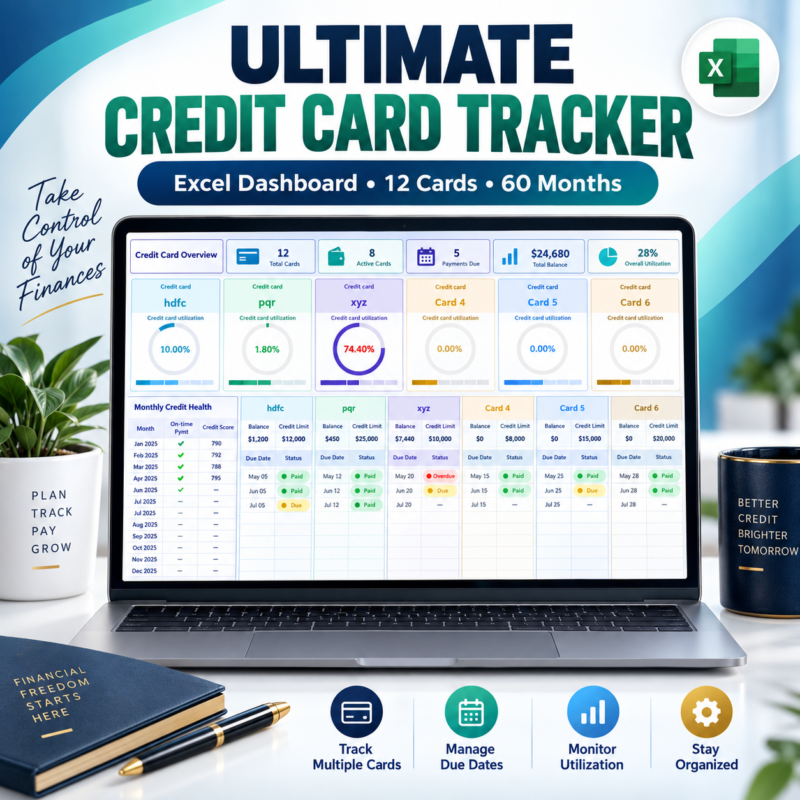
New to debt planning? Start with the Free Debt Payoff Starter Sheet to list balances, rates, payments and payoff priorities. If most of your balances are credit cards, the Ultimate Credit Card Payment & Utilization Tracker adds monthly balance, fee, payment-date and utilization tracking.
Frequently asked questions
Is debt snowball always faster?
No. It may close the smallest account sooner, but total payoff time depends on balances, rates, payment amounts, fees and new borrowing.
Does debt avalanche always save money?
When the same debts and payment amounts are compared under stable terms, targeting the highest rate generally minimizes interest. Actual results can change with variable rates, fees, late payments or new transactions.
Should I stop paying other debts while targeting one?
No. Both methods assume that you continue making required payments on every debt. Missing payments can create fees and other serious consequences.
Can I switch methods?
Yes. Reassess when rates, balances, income or expenses materially change. Record the reason and update the plan so your projections stay understandable.
Is this the same as debt settlement?
No. Snowball and avalanche are payment-priority methods. Debt settlement involves negotiating to pay less than the amount owed and can carry significant costs and risks.
Choose a method you can maintain
The mathematical difference between snowball and avalanche matters, but so does consistency. Use current statements, protect your sensitive information, keep required payments current and review the plan regularly. Browse all Finance Planners for budgeting, bills, savings, emergency-fund and household-finance tools.
Educational disclaimer: This article and planner provide general organizational information only. They are not financial, credit, tax, legal or investment advice. Results are estimates and are not guaranteed. Verify terms with each creditor and consult a qualified professional about your circumstances.